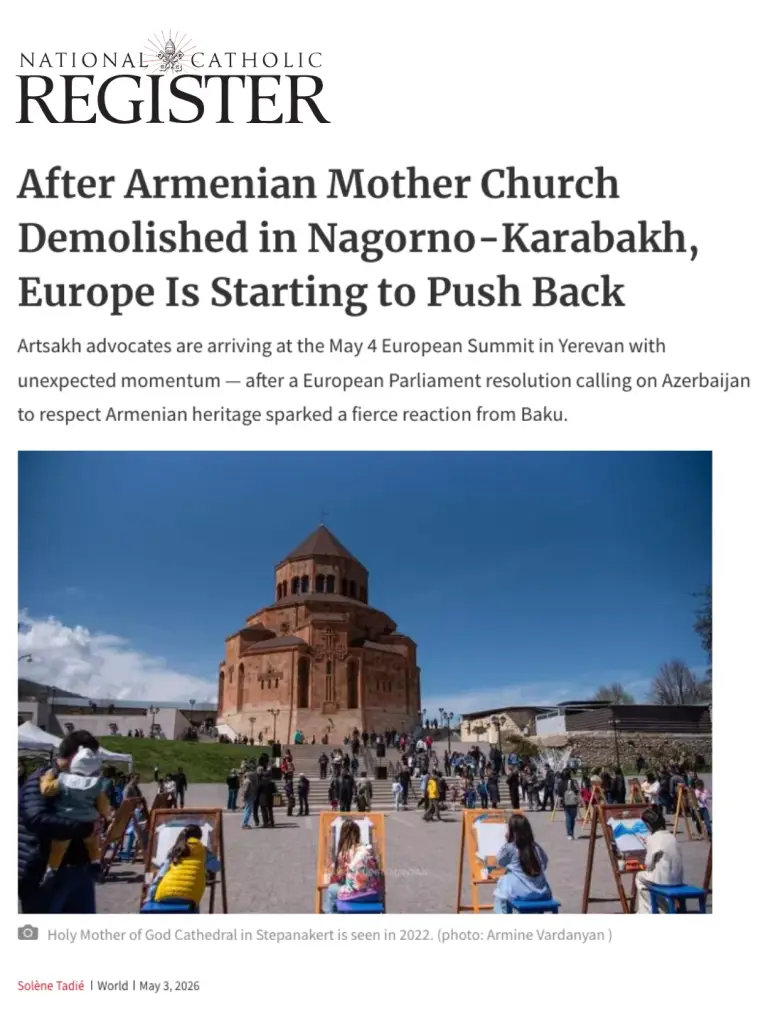
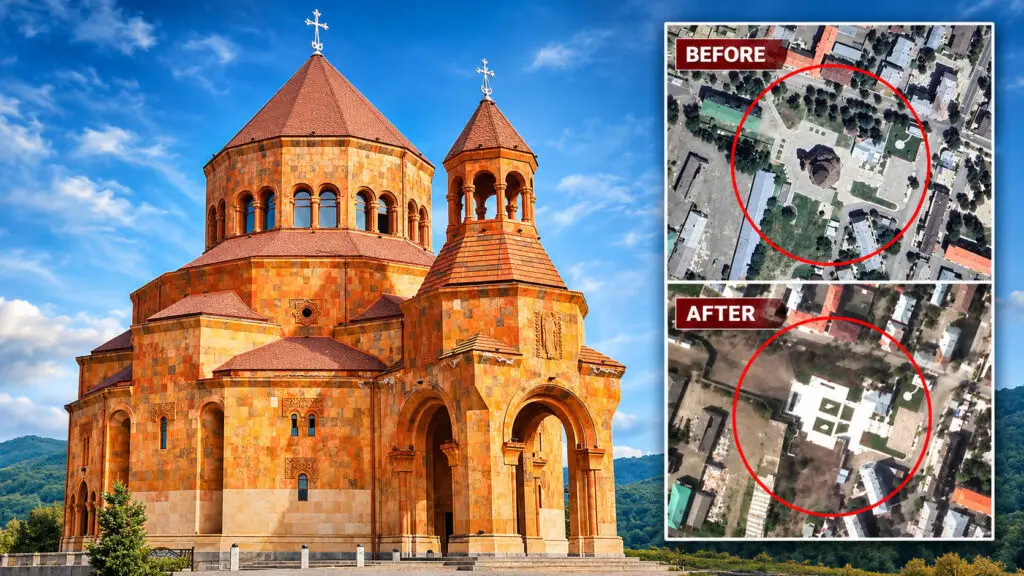
A church that stood at the beginning of 2026 no longer exists. A cemetery containing centuries-old Armenian Christian gravestones has been leveled. Historic religious landmarks that survived generations of conflict are disappearing under Azerbaijani control. These are not accounts drawn from distant history. They are among the findings documented this year through satellite monitoring of Nagorno-Karabakh (Artsakh).
On October 5, 2026, Caucasus Heritage Watch (CHW), a research initiative associated with Cornell and Purdue Universities, released its ninth monitoring report, documenting further destruction, damage, and threats to cultural heritage sites. The findings raise an urgent question: Can peace truly endure when the religious and cultural inheritance of an entire people remains vulnerable?
The report identifies four newly documented cases of destruction, four episodes of damage, and five newly threatened sites. Among the losses documented in the Caucasus Heritage Watch impacted-sites database is the Holy Mother of God Cathedral in Stepanakert, demolished between March and April 2026. St. Jacob Church, another Armenian Apostolic place of worship, was also razed. In Shushi, the Old Armenian Russian Cemetery, containing medieval khachkars and nineteenth-century gravestones, was destroyed during infrastructure development.
These findings underscore a critical reality: The destruction of religious heritage is not merely a cultural preservation issue. It raises fundamental questions about freedom of religion or belief. When communities are displaced and their places of worship disappear, the consequences extend beyond physical structures. The ability to preserve religious identity, maintain spiritual traditions, and pass faith from one generation to another is placed at risk.
For Armenians displaced from Artsakh, churches, monasteries, and cemeteries represent centuries of worship, family history, and spiritual inheritance. Their destruction deepens the wounds of displacement and threatens the possibility of meaningful reconciliation.
The international community must distinguish between ending armed hostilities and securing the fundamental rights that make peace sustainable. Diplomatic agreements may establish political commitments and normalize relations, but lasting peace also requires safeguards for religious freedom, cultural identity, and the heritage of displaced communities. The absence of armed conflict does not, by itself, guarantee reconciliation.
The international community has already recognized its responsibility to protect this heritage. In December 2021, the International Court of Justice ordered Azerbaijan to take necessary measures to prevent and punish acts of vandalism and desecration affecting Armenian cultural heritage, including churches, monuments, and cemeteries.
Yet the findings documented in 2026 demonstrate that serious threats persist. Governments, international institutions, and religious freedom advocates should demand independent monitoring, protection of endangered sites, preservation of historical records, and accountability for documented destruction.
Protecting Armenian Christian heritage is not a responsibility reserved for Christians. It reflects a universal commitment to religious freedom. Whether the threatened site is a church, mosque, synagogue, temple, or cemetery, its preservation affirms a principle that transcends national borders and religious traditions: no community should have its sacred history destroyed or its religious identity denied.
Lasting peace requires more than the cessation of hostilities. It requires protecting the fundamental freedoms that allow communities, their faith, and their heritage to endure.
The preservation of Armenia’s Christian heritage is therefore not peripheral to the pursuit of peace. It is one of the measures by which the credibility and durability of that peace must be judged.
- Dr Paul Murray
Call to Action:
The cultural genocide in Artsakh demands a response from Christians worldwide:
1. Witness: Do not let this erasure happen in silence. Share the truth about what is being destroyed.
2. Remember: Never forget the ongoing cultural genocide in Artsakh.
3. Advocate: Demand that international bodies intervene to stop the systematic destruction of Armenian Christian heritage.
4. Document: Support efforts to preserve photographic and historical records of what is being erased.
5. Stand with Armenia: Join our coalition and refuse to let the world forget the Armenian Christians of Artsakh.
About Save Armenia
Save Armenia is a nonprofit organization mobilizing faith leaders, policymakers, and global partners to support Armenia’s security, sovereignty, and religious freedom. Through advocacy, leadership engagement, and strategic initiatives such as the Save Armenia Peace Indicator and the Build Armenia implementation platform, the organization works to strengthen Armenia’s long-term resilience and stability while mobilizing American Christian and policy communities to support Armenia amid ongoing regional challenges.
Media Contact
Eleanor Forshaw
Deputy Director
Save Armenia
eforshaw@savearmenia.us