As negotiations continue, Christian leaders must insist that peace be measured by actions, not promises.
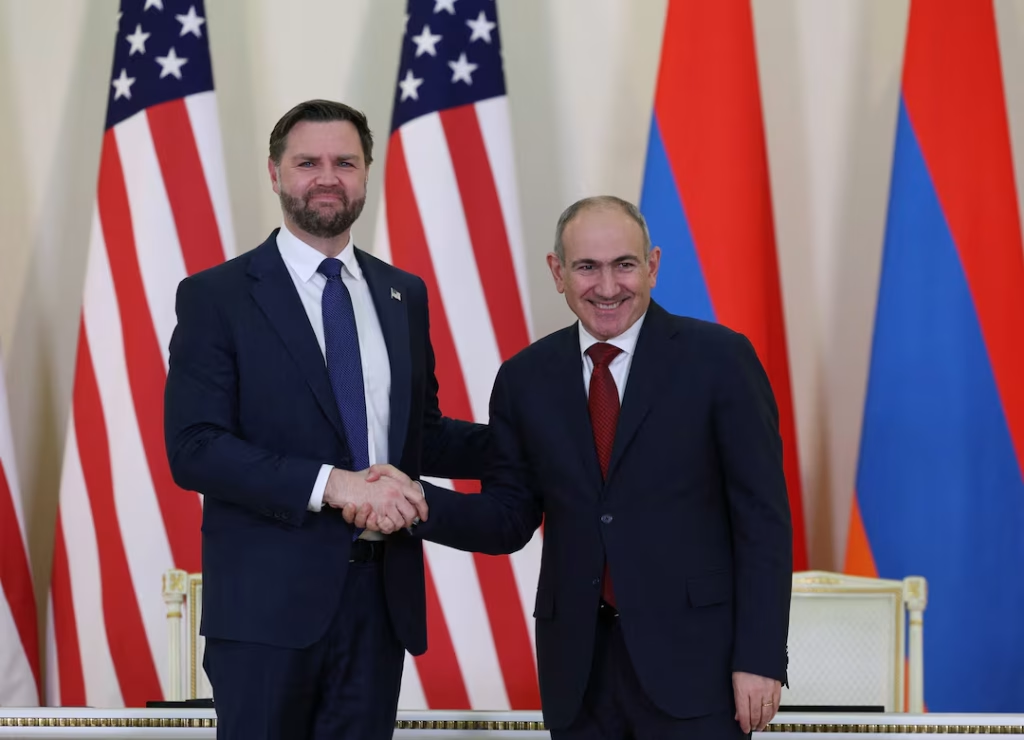
Image Credit: Reuters
Vice President JD Vance’s historic trip to Armenia and Azerbaijan is the right moment to insist on one concrete test of this new peace. The immediate release of the remaining Armenian Christian prisoners still being held in Baku’s jails is that test. Their freedom would turn abstract promises from the August 8 White House declaration into tangible proof that this process is about more than maps, corridors, and press conferences.
The unfinished business of August 8
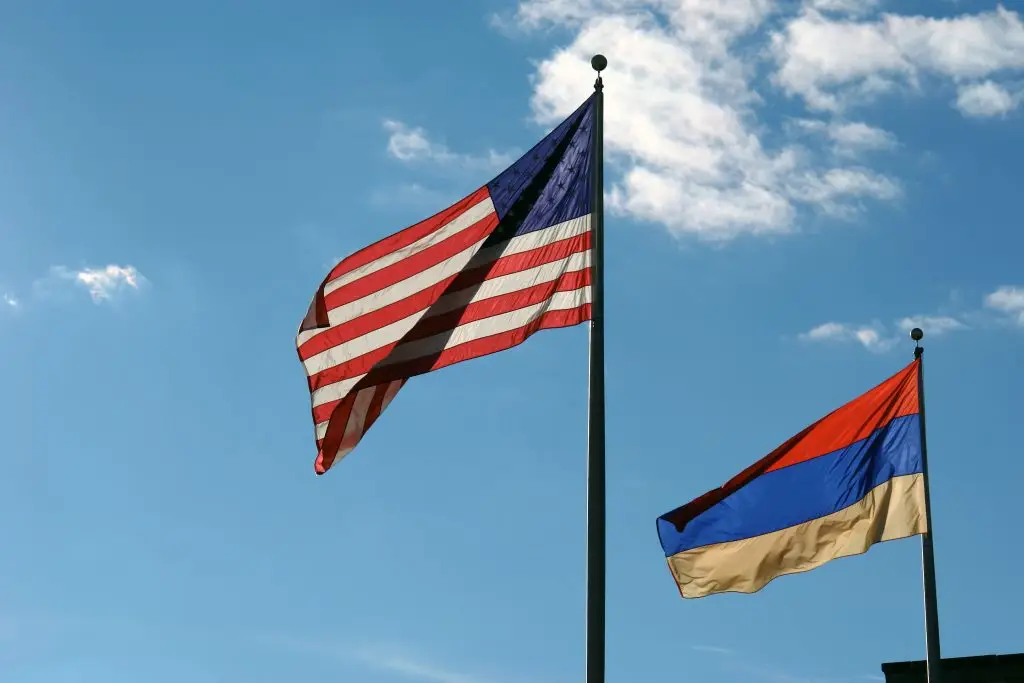
When Armenia and Azerbaijan signed their joint declaration at the White House on August 8, 2025, it was promoted as the first step toward closing a forty-year chapter of war. Yet even supporters of the deal noted its silences. While it spoke of borders, recognition, and connectivity, it sidestepped questions of justice, accountability, and the fate of prisoners taken in the collapse of Nagorno Karabakh. Today, as Vice President Vance travels between Yerevan and Baku, those omissions are no longer technicalities. They are human lives.
Advocates and legal experts have warned that peace struck while Armenian captives remain in Baku’s prisons risks becoming peace under duress. International bodies and human rights organizations have underscored that those who are arbitrarily detained, including ethnic Armenians, must be released immediately. If this process is to be credible, the White House declaration must now be read through this lens. Its next chapter should begin with cell doors opening.
The human face of Christian hostages
Behind the numbers are Christian men whose names are known in churches and advocacy circles across the world. These men include political leaders, civic figures, and ordinary civilians who were swept up in the campaigns against Artsakh. Christian advocacy organizations document that dozens of Armenian prisoners remain in Azerbaijan. Many more are believed to have disappeared after being last seen in Azerbaijani custody. Their families, their pastors, and their communities live in a state of suspended grief.
Recent months brought a carefully staged gesture. A small number of Armenian hostages were released and presented as evidence of Baku’s constructive intent. For those families, this was a moment of joy. However, partial releases presented as goodwill cannot hide the essential reality. Many Armenian Christians still languish in prison. Their fate is openly tied to political concessions. At that point they cease to be ordinary detainees and become hostages in the most direct sense.
A test case for real peace
Vice President Vance’s mission has been framed as an effort to consolidate the peace agreement and promote a new corridor through southern Armenia that promises trade, investment, and a remapped region that avoids dependence on Russia and Iran. These goals deserve careful consideration. However, any corridor that is built on the suffering of forgotten prisoners will carry a moral fault line beneath its polished surface. If Azerbaijani authorities can hold Christian Armenians indefinitely as bargaining chips, then displaced families have little reason to trust that they or their heritage will be safe tomorrow.
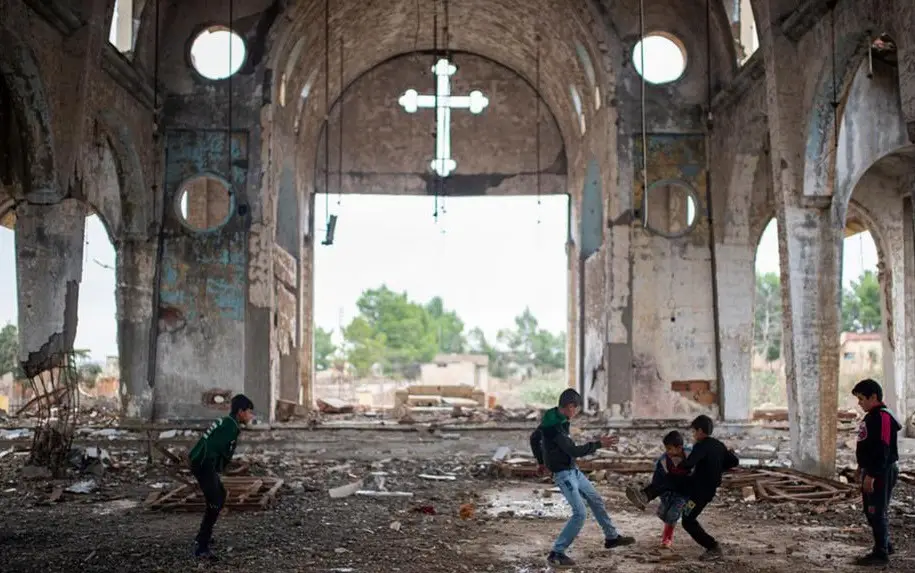
From a Christian perspective this is not a marginal human rights issue. It is the hinge on which reconciliation turns. Christian leaders have already urged the United States to prioritize the release of these hostages. They have argued that continued detention mocks the language of religious freedom and undermines the credibility of Western diplomacy. When more than one hundred thousand Armenian Christians have been driven from their ancestral homeland and when churches and cemeteries are systematically erased, leaving their shepherds and lay leaders in prison sends a clear message. The persecution has not ended. It has simply moved indoors.
Save Armenia’s call to action
In recent weeks, Save Armenia has taken this message directly into the halls of power in Washington. Representatives of the organization have briefed officials at the United States Department of State and members of Congress. In those meetings they have urged that any future engagement with Baku, including security cooperation and support for regional corridors, be conditioned on the release of all Armenian hostages.
In these meetings, Save Armenia has pressed for the United States to use its considerable leverage. That leverage is diplomatic, economic, and security related. The message is simple. Hostage diplomacy is incompatible with a genuine peace process. A sustainable peace in the South Caucasus cannot be achieved while Christian prisoners are treated as bargaining chips.
Dr. Paul Murray, the Chief Executive Officer of Save Armenia, has spoken plainly about this. “If the August 8 signing at the White House was the down payment on peace, then the release of every Armenian Christian prisoner is the first installment that proves the check will not bounce,” he has said. “Until those men are home with their families, this process will feel like a contract written over their bodies rather than a covenant rooted in justice.”
Dr. Murray has also described the specific message carried into government offices. “We have told our colleagues at the State Department and on Capitol Hill that America cannot afford a peace built on silence about hostages,” he has explained. “Vice President Vance has a rare opportunity in Baku. With one clear demand, the demand to free the prisoners now, he can show that United States leadership still understands the difference between a photo opportunity and a moral breakthrough.”
What Vice President Vance should do in Baku
As vice president, Vance carries both moral and political weight. He can ensure that this peace process does not repeat the pattern of trading justice for short term stability. There are two steps he should take in Baku.
First, he should make the prisoners a precondition for progress. The release of all Armenian hostages should not be treated as a side issue. It should be presented as a central benchmark. Implementation of the August 8 framework and United States support for corridors, energy projects, and new investments should be measured against one clear standard. All remaining Armenian hostages must be freed, unconditionally and without delay.
Second, he should tie symbolism to substance. Washington cannot celebrate the first visit of a sitting United States vice president to Armenia while remaining silent about Armenians who are still imprisoned for their identity and convictions. If Vance wants his trip to be remembered as more than a diplomatic milestone, he should leave the region able to point to one unmistakable sign of change. That sign would be empty prison cells, reunited families, and Christian pastors and lay people who can worship without chains.
Christian leaders, pastors, and believers across the United States are gathered in this moment as decisions are being shaped. Through Save Armenia, they are speaking with clarity and coherence, through coordinated witness, direct engagement with policymakers, and unified public voice. They are affirming a simple truth. Infrastructure without integrity is not peace. No corridor can be called a pathway to prosperity while Armenian Christian prisoners remain held in Baku.
About Save Armenia
Save Armenia is a nonprofit organization mobilizing faith leaders, policymakers, and global partners to support Armenia’s security, sovereignty, and religious freedom. Through advocacy, leadership engagement, and strategic initiatives such as the Save Armenia Peace Indicator and the Build Armenia implementation platform, the organization works to strengthen Armenia’s long-term resilience and stability while mobilizing American Christian and policy communities to support Armenia amid ongoing regional challenges.
Media Contact
Eleanor Forshaw
Deputy Director
Save Armenia
eforshaw@savearmenia.us